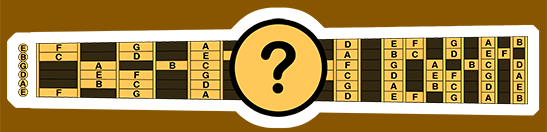
Improvements in the pedagogy of position-aware sightreading offer a new approach to the whole fretboard that is both teachable and enjoyable. From the outset, beginning students get the satisfaction of playing simple tunes in both seventh and first positions. Each exercise becomes a melody recognition puzzle they solve by playing the notes, without worrying about Every-Good-Boy-Does-Fine. This is possible due to new visual-spatial learning tools coupled with a wealth of new reading material, all freely available on the web. Fretboard diagrams are drawn using music notation, to cue fingering memories based on the visual appearance of notes as seen in sightreading. The reading material is a unique compendium of over 2600 exercises arranged for guitar from public domain melodies across all genres. Each has been automatically graded by computer according to its intrapositional fingering complexity in each of its playable positions, so beginning students get music that exactly fits the notes they are learning, while more advanced students can see the difficulties of playing an exercise in alternative positions. The compendium is also a study in melody itself. Metheny (2022) said that, unlike harmony or rhythm, you can't go to school for four years to learn melody. But students can experience it here through the joy of sightreading while learning the fretboard.
This poster includes two sub-posters: "I-Space and Proprioception: How Melodic Sightreading Integrates the Four Knowledge Spaces of Mermikides" and "Automated Computation from Lilypond Music Notation of Intrapositional Fingering Complexity Metrics and Their Dependence on Position".